Food-object plush ideas for cafes and gift brands
How cafes, bakeries and gift brands can turn food objects into original plush ideas before asking for a sample.
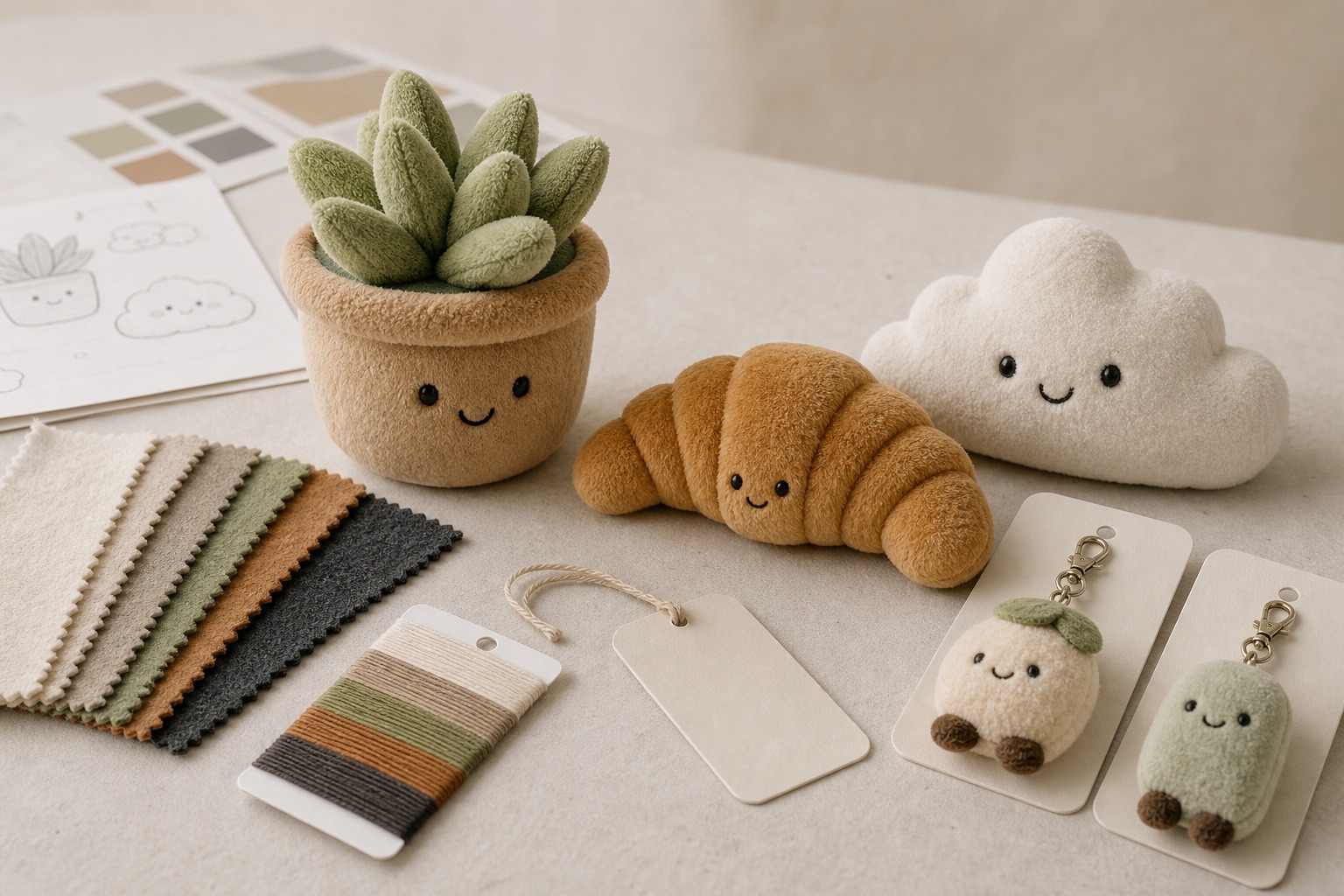
Food-object plush works best when the buyer starts from a brand-owned object, audience moment, shape, face style, size, and packaging role. The goal is not to copy a viral food plush, but to make a soft product that belongs to the cafe, bakery, shop, or gift brand.
A croissant, coffee cup, dumpling, cake slice, fruit, snack, or local dessert can become a plush idea quickly. The harder part is making it feel original. For B2B buyers, the useful question is not only "Can this food become plush?" It is "What should this plush do for the brand or sales channel?"
Start from the brand object
Food-object plush should begin with an object the buyer can own or clearly explain: a signature drink, bakery shape, local snack, campaign item, or gift set theme. A reference can help show mood, but the final direction should come from buyer-owned brand assets or an original product brief.
Choose the product role
- Counter display: needs a readable front view and stable shape for photos or shelf presentation.
- Gift add-on: needs simple size, easy packaging, and a clear link to the main brand item.
- Mini charm: needs simplified details, attachment planning, and packaging card questions.
- Boxed set: needs a reason for multiple pieces, not just more samples.
Make the face and silhouette do the work
A food plush often has a simple body, so face expression, color blocking, texture, and silhouette become important. A sleepy bread, proud coffee cup, or shy dumpling can feel more memorable than a generic smiling object. Mark the expression and shape priorities before sampling starts.
Packaging can make the concept clearer
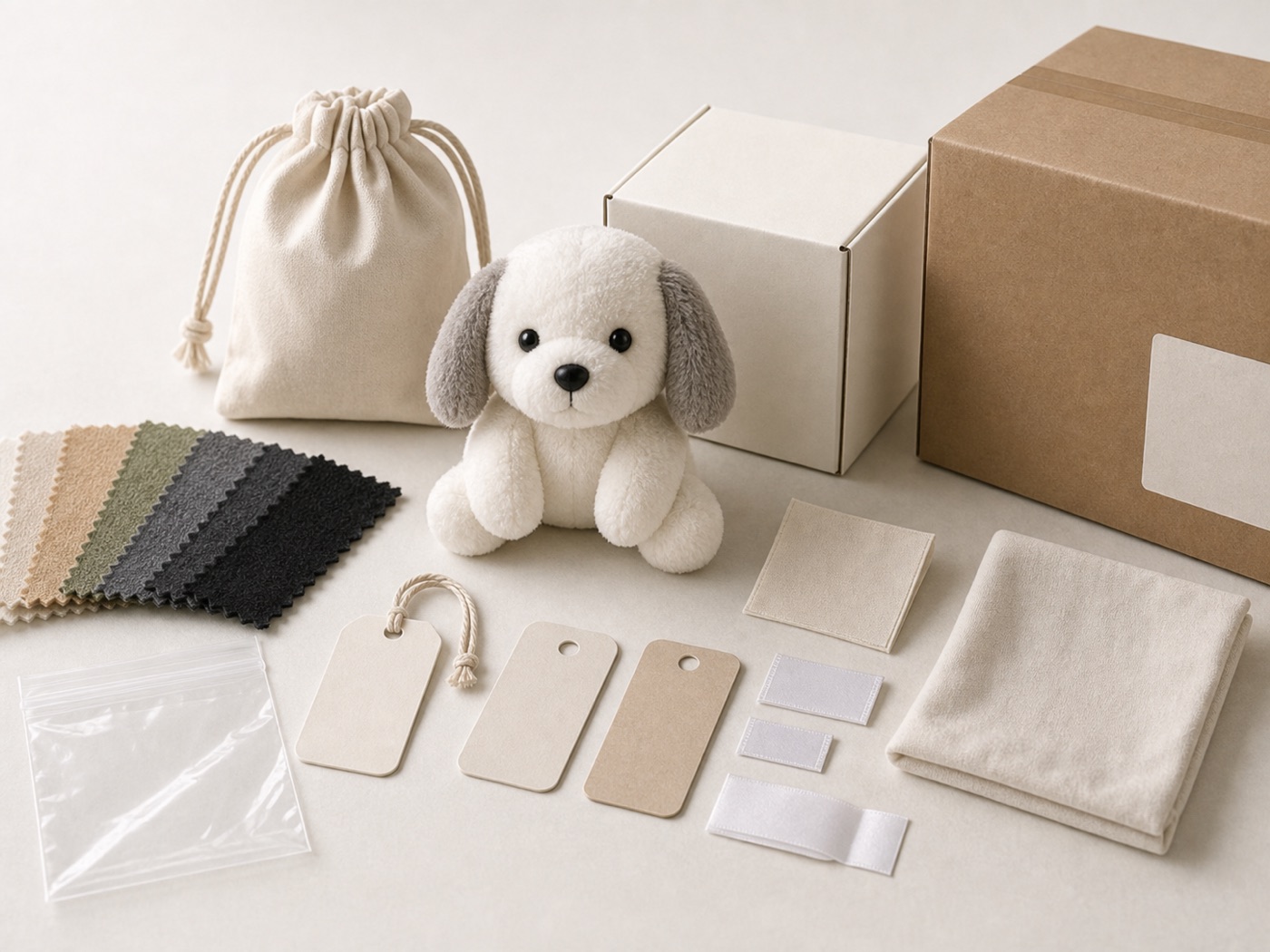
Food-object plush often benefits from a hang tag, backing card, tray, pouch, or box that explains the product story. That packaging should be part of the first brief if it affects retail display, gift feel, or how the buyer wants customers to understand the item.
Common mistake
The common mistake is sending a photo of a popular food plush and asking for something similar. That creates originality and rights problems. A stronger brief explains what the buyer owns, what the product should represent, and which details can be developed into an original plush direction.
Useful next links
The food shape makes the idea easy to read; the brief makes it ownable.