Incoterms for Plush Imports: EXW, FOB, CIF and DDP vs Landed Cost
A low unit price is not your landed cost. Here is what the common Incoterms mean for a plush order, where cost and risk transfer, and how to compare quotes on the same basis.
Incoterms (ICC Incoterms 2020) define who pays for and who bears the risk of each step between the factory and your door. For plush, the common terms are EXW (you arrange almost everything from the factory), FOB (the supplier delivers to the export vessel), CIF (the supplier covers freight and insurance to the destination port) and DDP (the supplier delivers cleared for import). The headline unit price means little until you add freight, insurance, duty, customs and last-mile to reach landed cost. Always confirm the Incoterm in the contract and price quotes on the same basis.
Why Incoterms matter for plush buyers
Plush is light but voluminous, so freight and packing assumptions move the real cost more than buyers expect. Two suppliers quoting the “same” price on different Incoterms are not comparable: one number may stop at the factory door, another at your warehouse. Knowing the term tells you what is included and where your responsibility begins.
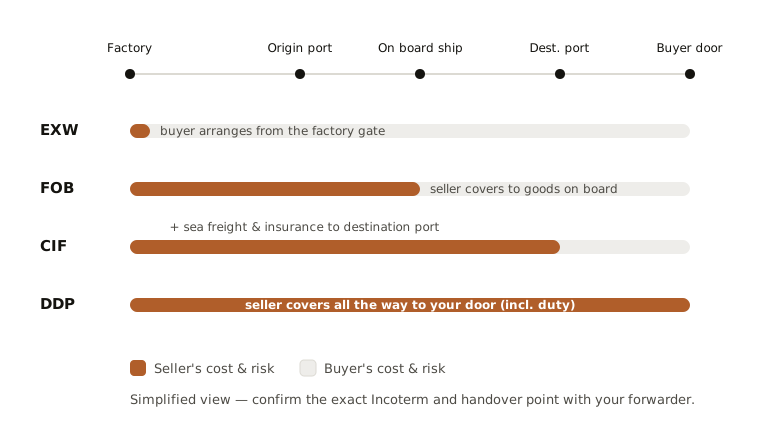
The four terms you will see most
| EXW (Ex Works) | Supplier makes goods available at their premises. You arrange and pay export handling, freight, insurance, import clearance and delivery. Maximum control, maximum work for the buyer. |
|---|---|
| FOB (Free On Board) | Supplier delivers goods onboard the vessel at the named export port and clears them for export. Risk passes to you there; you handle main freight, insurance and import. Common for sea shipments. |
| CIF (Cost, Insurance, Freight) | Supplier pays freight and minimum insurance to the named destination port. Risk still passes at the origin port. You handle import clearance, duty and last-mile. |
| DDP (Delivered Duty Paid) | Supplier delivers to your named place, cleared for import, bearing duties. Most is included for the buyer, but the supplier prices in those costs and risks. |
Landed cost: what to add to the unit price
- Export packing and origin handling.
- Main freight (sea or air) — significant for bulky plush.
- Insurance.
- Import duty and any taxes or VAT (depends on HS code and country).
- Customs clearance and broker fees.
- Last-mile delivery to your warehouse.
A note on containers
FOB and CIF were written around goods loaded over a ship’s rail. For containerized cargo, the ICC actually recommends FCA, CPT or CIP, because risk on a container is better defined at handover to the carrier. Many plush deals still use FOB by habit; if you ship containers, ask your forwarder whether FCA fits better.
How to compare quotes fairly
- Ask every supplier to quote on the same Incoterm (FOB at the same port is a common baseline).
- Add the remaining landed-cost steps yourself, or ask your forwarder for an estimate.
- Compare total landed cost per unit, not the factory-gate number.
- Confirm the agreed term and named place in writing in the contract.
What JWC can help with
JWC can share packing, carton and CBM context that affects freight, and coordinate documents for the agreed term. JWC does not set your duty rate or act as your customs broker; import classification, duty and clearance are confirmed with your importer, broker or forwarder.
Plush Incoterms FAQs
Is FOB always cheaper than CIF or DDP?
Not necessarily. FOB looks lower because it excludes freight, insurance, duty and last-mile. CIF and DDP bundle more in, so the headline is higher but covers more steps. Compare total landed cost, not the term label.
Which Incoterm is best for a first plush order?
Many buyers start with FOB at a named Chinese port and use their own forwarder, which keeps freight transparent. EXW gives the most control but the most work; DDP is simplest but the convenience is priced in. The right choice depends on your logistics experience and volume.
Who pays import duty?
Under EXW, FOB and CIF the buyer (importer of record) handles import clearance and duty. Under DDP the supplier does. Either way, the duty rate depends on the HS code and destination country — confirm it with your broker.
Should I use FOB for container shipments?
The ICC recommends FCA, CPT or CIP for containerized cargo because risk transfer is clearer at carrier handover. FOB is still widely used; if you ship full or part containers, ask your forwarder whether FCA is a better fit.
Next Resources to Read
Notes & sources
This guide is general trade education, not legal or customs advice. The Incoterm definitions summarized here follow the ICC Incoterms 2020 rules; the binding text is the ICC publication. Duty, tax and clearance depend on your HS code and destination — confirm with your importer, customs broker or freight forwarder.
Primary reference: International Chamber of Commerce (ICC) Incoterms 2020 at iccwbo.org.