Embroidered eyes vs plastic eyes for custom plush characters
How face-detail choices affect expression, sample review, target-market questions and the final plush feel.
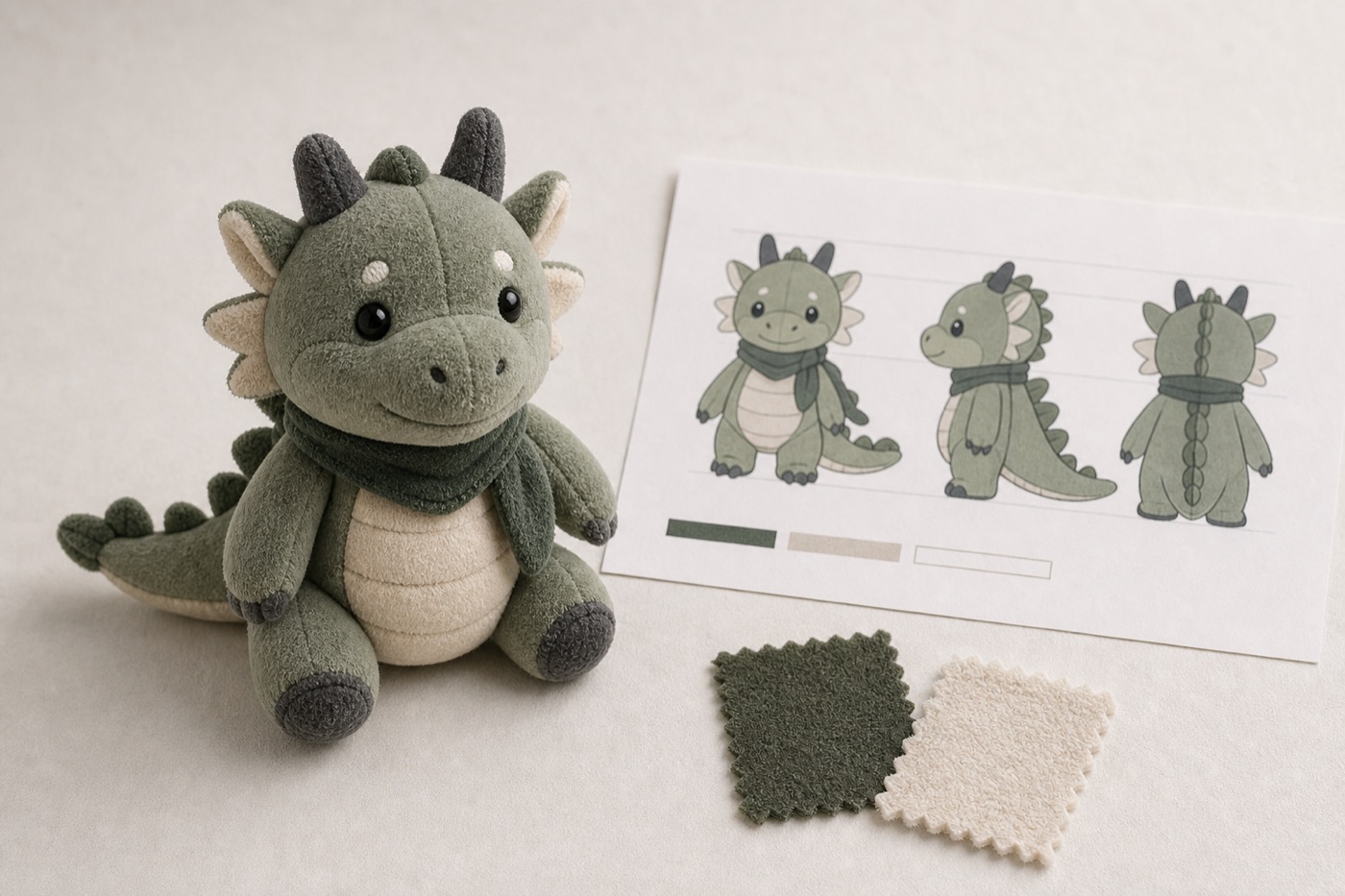
Embroidered eyes and plastic eyes create different plush characters. Embroidery can control expression and flat detail; plastic eyes can create shine and depth. The right choice depends on character style, sample size, target-market questions, construction and the buyer's review priorities.
A plush face can change completely when the eyes change. Embroidered eyes may feel soft, graphic or controlled. Plastic eyes may feel dimensional, shiny or more toy-like. Neither choice is automatically better. The useful question is what the face needs to communicate and what questions the target market may require the buyer to review.
What embroidery does well
Embroidery is useful when the buyer needs precise expression, simple line art, sleepy eyes, stylized shapes, small mouths, blush marks or logo-like face language. It can help keep the face soft and integrated with the fabric, especially when the character's mood depends on line shape.
What plastic eyes can change
Plastic eyes can add shine, depth and a more dimensional toy expression. They may work for certain animals, teddy-style characters or designs where the eye is meant to catch light. They also create attachment and target-market questions that should be discussed before the sample is treated as final.
Questions to compare before sampling
- Expression: does the face rely on line shape, shine, depth, sleepy mood or cartoon simplicity?
- Size: will the detail still read clearly at the intended plush size?
- Target market: are there age, channel, retailer or testing questions the buyer must review?
- Construction: does the eye method affect fabric, filling, seam placement or sample approval?
Common mistake
The common mistake is choosing the eye method from a reference photo without asking why it works. A shiny eye from one plush may not fit a flat graphic mascot. A fully embroidered face may not fit a teddy-style character that needs depth. The method should support the character, not copy the reference.
What to prepare before RFQ
- Face priority: mark which part of the expression cannot drift.
- Reference purpose: say whether references show mood, technique, size or finish.
- Market context: share the target region or retail channel if known.
- Open option: write "please recommend" if the method should be compared during project review.
Useful next links
The eye method is not just a detail; it decides how the character looks back at the buyer.