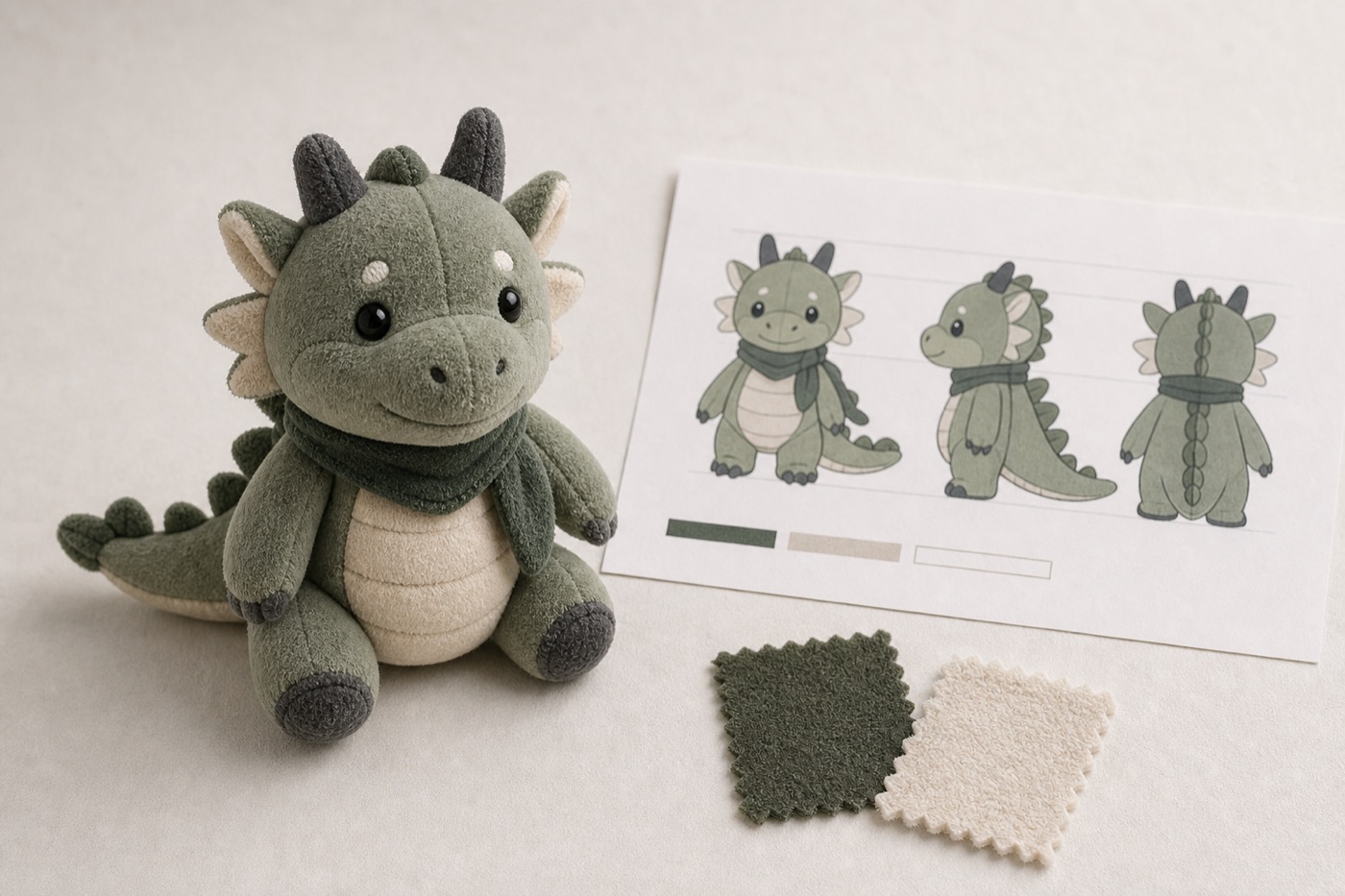
Why tiny plush details cause sample revisions
Small eyes, mouth shape, embroidery, tags and accessories often decide whether a plush sample feels close or needs another review round.
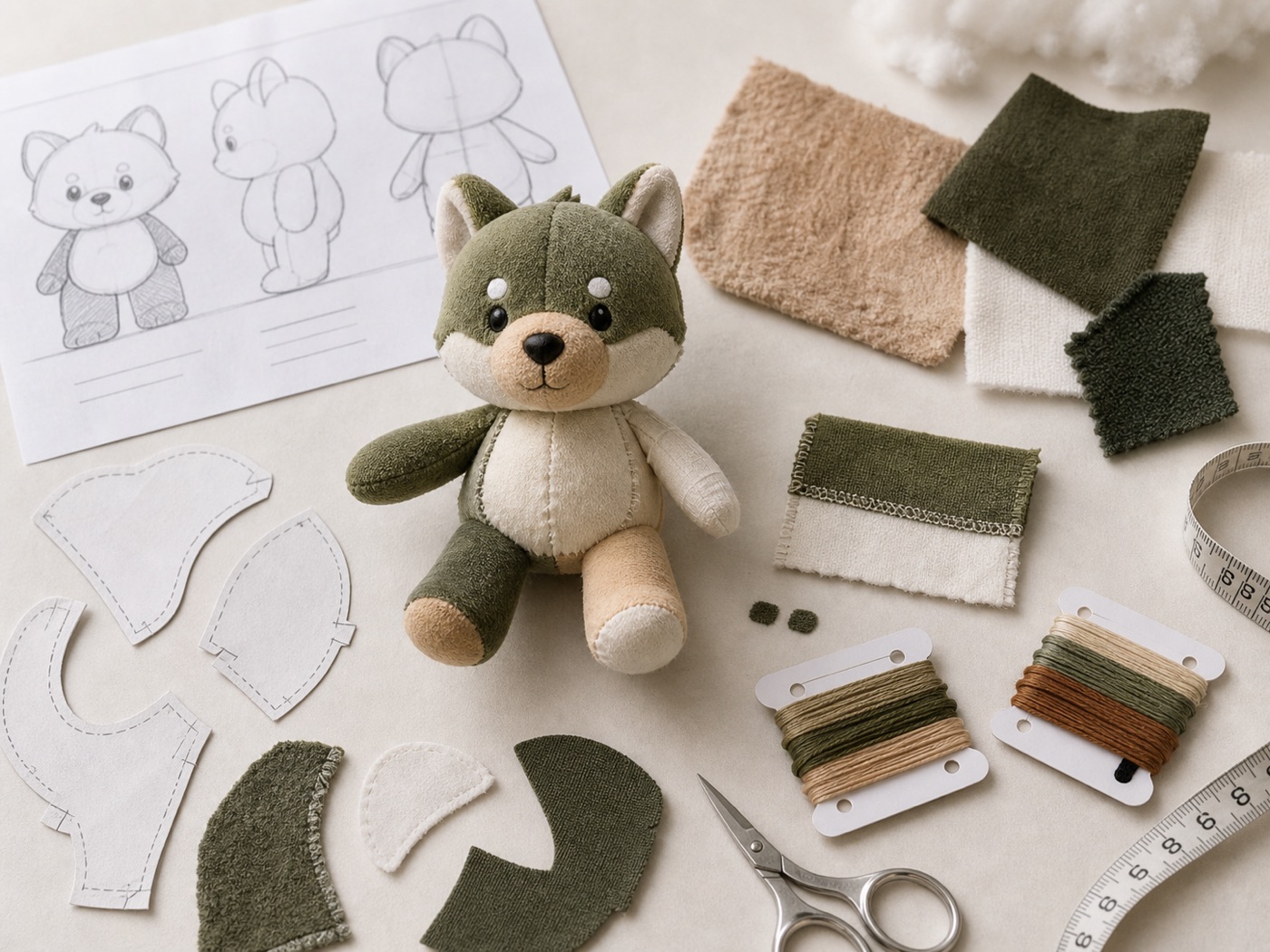
Tiny plush details cause revisions because flat artwork has to become fabric, stitch, filling, seam and placement decisions. Buyers can reduce back-and-forth by marking which details must stay exact, which can simplify, and what the first sample is supposed to prove.
A first plush sample can look close from across the room and still feel wrong in the buyer's hand. The reason is often not the whole character. It is a small detail: eye size, mouth angle, embroidery thickness, blush position, label placement, accessory shape, or how the stuffing changes the face.
Small details carry character identity
The face, logo, body proportion, and one or two signature details usually carry more value than the buyer realizes at the RFQ stage. If those details are not marked clearly, the sample maker has to interpret them from the artwork. That interpretation may be reasonable, but it may not match what the buyer sees as essential.
Details that often shift in sampling
- Eyes and mouth: small changes in stitch length, eye spacing, or mouth angle can change the whole expression.
- Embroidery thickness: thin art lines may need to become wider stitches, especially on small plush.
- Accessories: bows, leaves, hats, patches, charms, and tiny objects need enough surface area to stay readable.
- Tags and labels: placement can affect appearance, packaging, and buyer-side review questions.
Must-keep vs flexible notes
A useful sample brief separates must-keep details from flexible details. Must-keep notes may include the sleepy eye shape, left-foot logo, pot silhouette, or character blush. Flexible notes may include exact fabric texture, accessory size, or whether a detail is embroidered, printed, or simplified after review.
How to write better revision feedback
Good feedback points to the detail, says what changed, and explains what the next sample should prove. Instead of writing "make it cuter," write "keep the eyes closer to the artwork; the current stitch makes the face look surprised instead of sleepy." That gives the project team a visible correction target.
Common mistake
The common mistake is treating every detail as equally important. If every line, color, and accessory is marked as non-negotiable, the sample review becomes slow and unclear. Choose the details that carry the character first, then let less important parts stay open for plush-friendly adjustment.
Useful next links
A sample revision is easier when the buyer names the detail that carries the character.