Plush Shipping: Sea, Air & Express Courier Compared
Plush is light but bulky, which changes the shipping maths. Here is how sea, air and courier compare — and how samples usually move.
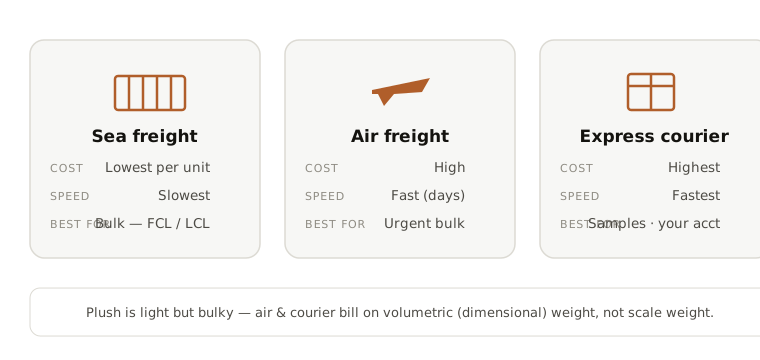
Three routes move plush: sea freight (cheapest per unit, slowest), air freight (faster, far pricier), and express courier such as DHL, FedEx or UPS (fastest, best for samples and small lots). Because plush is light but voluminous, cost is usually driven by volume, not scale weight — air and courier charge on volumetric (dimensional) weight, and sea is priced by CBM. Bulk orders typically go by sea (LCL, or a full container, FCL); samples to US and EU buyers usually go by express courier, often on the buyer’s own courier account.
The three routes compared
| Sea freight | Lowest cost per unit, longest transit. LCL (shared container) for smaller volumes; FCL (full container) once you fill one. Priced by CBM. |
|---|---|
| Air freight | Days, not weeks, at much higher cost; charged on volumetric weight, so bulky plush is expensive. For urgent or higher-value lots. |
| Express courier | DHL / FedEx / UPS door-to-door, fastest, simplest for samples and small quantities; also volumetric-weight based. |
Why plush is a volume game
A carton of plush weighs little but takes a lot of space. Air and courier bill on volumetric (dimensional) weight — a formula based on carton size — so fluffy product costs more than its scale weight suggests. Good packing (compression where safe, right-sized cartons, efficient CBM) directly lowers freight; see the carton & CBM guide.
How samples usually ship to US & EU buyers
Samples almost always go by express courier, because speed matters and quantities are tiny. In practice many overseas buyers prefer to pay the sample freight on their own courier account — they give their DHL, FedEx or UPS account number and the shipment goes out “freight collect” on that account. This is normal, keeps the freight cost transparent on the buyer’s side, and avoids a shipping mark-up. Confirm the account number and destination details before dispatch.
Match the route to the job
- Samples or a few units: express courier, often on your own account.
- Small bulk, not urgent: sea LCL.
- Full-container volume: sea FCL — best per-unit cost.
- Urgent or seasonal catch-up bulk: air freight, budgeting for volumetric cost.
Tie shipping to Incoterms
Who books and pays each leg depends on the Incoterm (EXW, FOB, CIF, DDP). Decide the route and the term together so the quote you compare is a true landed cost, not just an ex-works price; see the Incoterms guide.
Plush shipping FAQs
Why is air freight so expensive for plush?
Air (and courier) charge on volumetric (dimensional) weight, calculated from carton size. Plush is light but bulky, so it occupies far more space than its actual weight, which pushes the chargeable weight — and the cost — up.
Who pays for sample shipping?
For samples, US and EU buyers commonly pay the courier freight themselves, giving their own DHL, FedEx or UPS account number so the shipment goes out freight-collect on their account. It keeps freight transparent; confirm the account and address before dispatch.
Should bulk plush go by sea or air?
Bulk usually goes by sea — LCL for smaller volumes, a full container (FCL) once you can fill one — because it is far cheaper per unit. Air is for urgent or seasonal catch-up shipments where speed outweighs the higher volumetric cost.
Next Resources to Read
Notes & sources
This guide is general logistics education, not a freight quote. Volumetric-weight formulas, container types and transit times vary by carrier and lane. Courier names are examples, not endorsements. Confirm routes, costs and Incoterms with your freight forwarder and supplier.