Pre-Production Sample & Golden Sample for Plush
The single most important reference in your project: the approved sample, signed and sealed, that bulk is measured against.
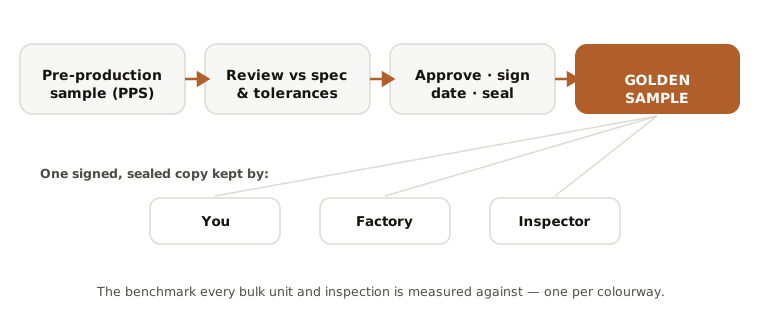
A pre-production sample (PPS) is the sample the factory makes — with the real production materials and process — just before bulk. Once you review and formally approve it, the signed, dated, sealed copy becomes the golden sample: the physical benchmark you, the factory and any inspector all measure production against. Keeping a golden sample (one per colourway) is what turns “close enough” into an objective, agreed standard. Skipping it removes your main quality reference.
Where the PPS sits in the sample path
Most projects move through a first prototype sample (to prove shape and character), one or more revision rounds, then a pre-production sample made with the final fabric, fill, eyes, labels and packaging route. Only after the PPS is approved should bulk start. Treat anything before the PPS as development; treat the approved PPS as the production contract in physical form.
PPS vs golden sample
They are closely linked. The PPS is the pre-production sample made with the final materials, tooling and process. When you approve it, that approved unit — signed and dated — becomes the golden sample. The terms are often used interchangeably; “golden sample” specifically means the approved version that sets the standard.
Why it is the foundation of QC
Inspection only works if there is something objective to measure against. With a golden sample on hand, an inspector compares production units side by side — dimensions, colour, finish, attachment — and deviations outside your agreed tolerance become defined defects. Without one, “industry standard” becomes a guess.
How to handle it properly
- Approve the PPS in writing against the spec — email is fine, but be explicit: dimensions, colour, materials, labels and packaging.
- Sign and date the approved unit (or a signed approval sheet with photos) and seal it tamper-evident if possible.
- Photograph every surface, key measurements, labels, barcodes and packing; store files with the batch reference.
- Keep aligned copies: one with you, one at the factory, and one for your inspector if you use one.
- Make a separate golden sample for each colourway or SKU — do not approve one colour to stand for another.
What to measure and record
- Overall height and width (seated/standing, as defined in the spec).
- Key detail placements: eye spacing, ear position, logo placement.
- Stuffing firmness and weight (if specified).
- Label, warning and barcode content and placement.
- Polybag, hangtag and master-carton packing as production will ship.
Tie it to measurable criteria
A golden sample is strongest alongside written criteria: critical / major / minor defect definitions, the AQL level (AQL 2.5 for majors is common on consumer goods), key dimension tolerances and packaging requirements. Together they let production and inspection judge bulk consistently. If bulk deviates outside tolerance, the golden sample and defect list are the evidence base for rework, sort-out or hold — not a fresh argument after the fact.
Golden sample FAQs
Is a pre-production sample the same as the golden sample?
Almost — the PPS is the sample made with production materials and process before bulk; once you formally approve, sign and date it, that approved unit becomes the golden sample used as the reference standard during production and inspection.
When should I approve the golden sample?
Only after the PPS matches your tech pack on materials, colour (lab dip), dimensions, labels, packaging and any required tests you planned before bulk. Approving early locks in whatever is wrong.
Do I need a golden sample for every colour?
Yes — make a separate golden sample for each colourway or SKU. Approving one colour to represent another leaves colour and finish questions without a proper reference for the variants.
What if I cannot keep a physical golden sample?
At minimum keep signed, dated photos with key measurements and a written defect / tolerance list, and align copies with the factory and inspector. A physical sealed sample is best, because it lets inspectors compare bulk side by side.
Next Resources to Read
Notes & sources
This guide is general quality-management education reflecting common importer sampling practice. Sample handling, tolerances and acceptance criteria are confirmed per project. JWC can support golden-sample handling, but final approval is the buyer’s.