Artwork to plush sample: what changes during 3D translation
Flat artwork becomes plush decisions about face proportion, body shape, fabric, embroidery, filling and sample revision.
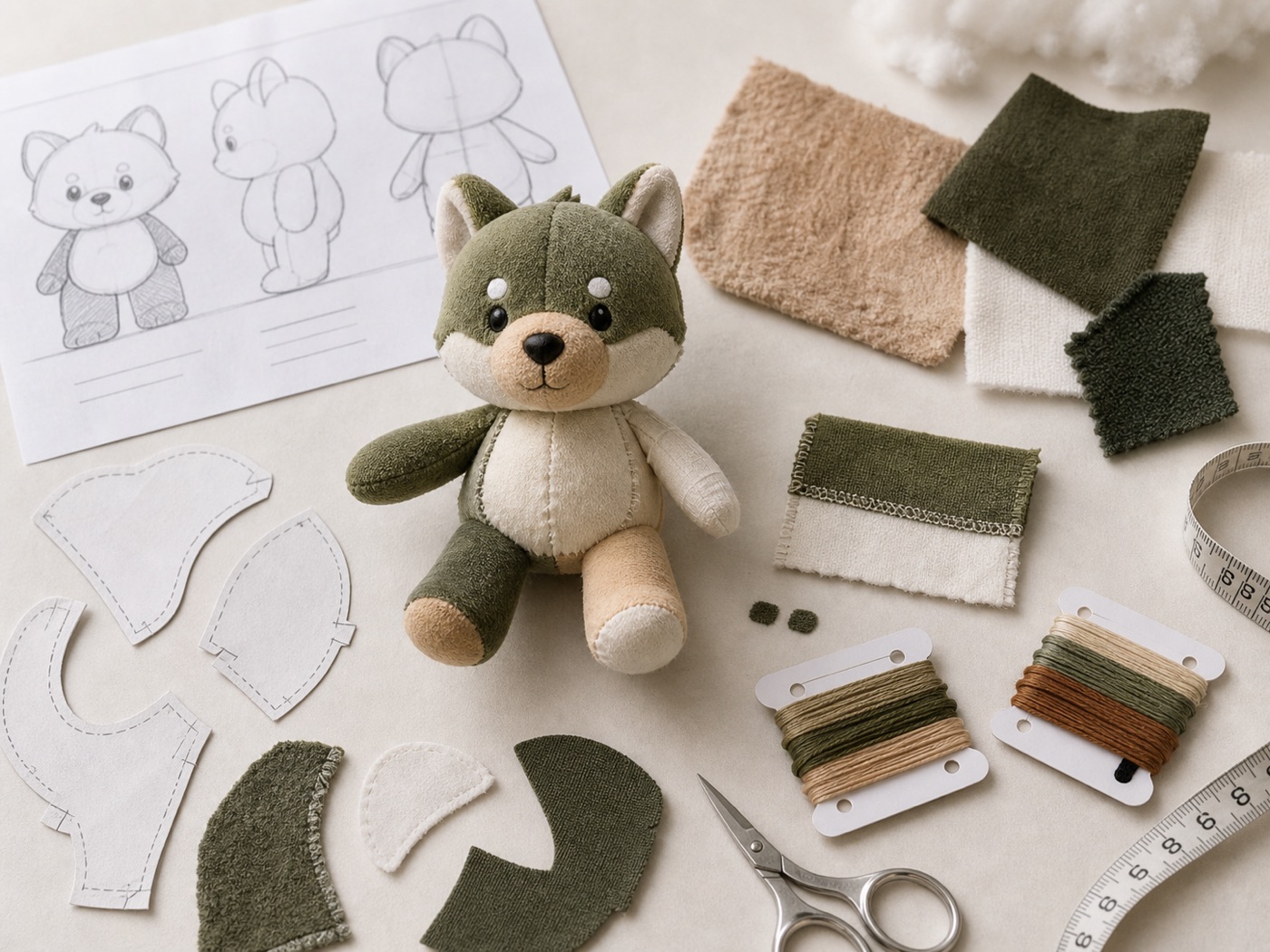
Flat artwork changes when it becomes plush because fabric has thickness, seams need room, embroidery has limits, and stuffing changes the silhouette. The sample review should separate acceptable 3D translation from drift that weakens the original character.
A character sheet can look finished on screen and still need translation before it becomes a soft product. Plush has volume, squeeze, seam allowances, fabric direction, embroidery scale, and stuffing behavior. A good review process names which details must stay and which details can be simplified for the sample to work.
What changes in 3D translation
The biggest change is volume. A flat cheek, leaf, hat, or paw becomes a shaped surface. Tiny line art may need embroidery simplification. Sharp corners often become softer. A long body may need panel support to keep its shape. Even when the character mood stays the same, the plush version may need different proportions so it sits, hangs, or photographs correctly.
Details to mark as must-keep
- Face expression: eye shape, mouth angle, blush position, eyebrow mood, or other cues that define the character.
- Silhouette: the body outline, head-to-body ratio, ears, leaves, horns, hat, or object shape that makes the character recognizable.
- Color logic: main color blocks and contrast relationships, while exact material matching remains a sample-review item.
- Signature detail: one or two buyer-priority details that should not be lost during plush simplification.
Common sample drift
Sample drift often appears when every detail is treated as equally important. The plush may keep a small accessory but lose the face mood, or match a color area while changing the character posture. Reviewing the sample against a short priority list helps the buyer decide whether the change is a practical translation or a problem that needs revision.
What to send before sampling
Send front, side, and back views if available, plus close-ups for face, accessories, labels, and any detail that carries the character identity. If only one illustration exists, add notes explaining what can change and what should stay. Mark whether the artwork is buyer-owned or authorized so the development path stays rights-safe.
Useful next links
The goal is not to copy a flat drawing stitch by stitch; it is to keep the character recognizable in soft 3D form.